Just One More: The Invisible Force That Keeps You at the Bar
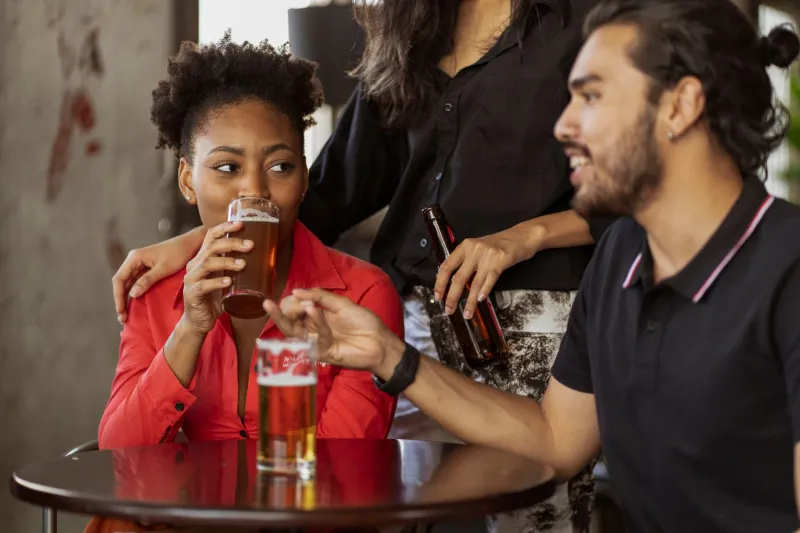
You know the moment. The glass hits empty. Your hand drifts toward your wallet. You do a quick mental calculation — the drive home, the early alarm, the pile of dishes you swore you'd handle tonight. And then someone across the table says something that makes you laugh so hard your shoulders shake, or the song on the jukebox shifts into something you haven't heard in years, and suddenly the wallet stays put.
"One more" becomes the easiest sentence in the English language.
That moment — that pivot between leaving and staying — is more interesting than it gets credit for. It's not weakness or poor planning. It's actually a small, quiet signal that something real is happening around you. And the best taverns in America are quietly engineered, sometimes deliberately and sometimes by pure instinct, to make that signal fire at exactly the right time.
The Pacing Is Everything
Before we talk about psychology, let's talk about rhythm. A bar that rushes you — clears glasses too fast, drops the check before you've thought about it, dims the lights like it's herding cattle toward the exit — doesn't create comeback rounds. It creates one-and-done visits.
Great taverns understand pacing the way great musicians understand silence. It's not about slowing service down. It's about giving a night room to breathe. When a bartender tops off your water without being asked, when the next drink arrives with a little conversation attached to it, when nobody's hovering — that's when time starts doing something unusual. It stretches. Pleasantly.
The decision to stay for another round rarely comes from the drink itself. It comes from the feeling that the night isn't finished with you yet. Good pacing is what creates that feeling.
What Conversation Does to Time
There's actual science behind why certain conversations make you lose track of the clock, but you don't need a research paper to understand it. You've lived it. You sit down meaning to stay for an hour, and somewhere in the middle of a story — maybe one you've told before, maybe one you're telling for the first time — the hour disappears.
Bars are unusually good environments for this kind of time collapse. The ambient noise creates a kind of acoustic privacy. You lean in, the other person leans in, and the whole room shrinks to the size of your table. Add a drink in your hand, a comfortable seat, and the low hum of other people having their own good time, and you've got conditions that are genuinely hard to replicate anywhere else.
The comeback round is often just a bid to keep that feeling alive a little longer. The drink is almost beside the point. It's an excuse to not break the spell.
The Role of the Space Itself
Ambiance is a word that gets thrown around a lot, usually in the context of upscale restaurants with mood lighting and a sommelier. But the right kind of ambiance matters just as much in a tavern — maybe more, because it operates quietly, without calling attention to itself.
Think about what makes a bar feel like a place you want to stay. It's rarely one thing. It's the height of the barstools. The way the light falls. Whether the music is loud enough to feel alive but soft enough that you don't have to shout. It's the texture of the bar top under your elbows, the smell of the kitchen doing something good nearby, the fact that your back is to the wall and you can see the whole room.
These details aren't accidental in places that have been doing this a long time. They're the accumulated wisdom of owners and bartenders who noticed, over years, what made people stay and what made them leave. A well-worn barstool in the right spot is doing more work than it looks like.
The Social Permission Slip
Here's something most people don't say out loud: one of the biggest barriers to ordering another round isn't the drink or the cost. It's permission. Not legal permission — social permission. The quiet, unspoken negotiation between the people at the table about whether the night is allowed to continue.
This is why the comeback round almost never happens alone. One person signals it — sometimes with words, sometimes just with a look — and someone else either matches it or doesn't. When both people lean back instead of reaching for their coats, the night gets a second wind. When one person checks their phone and the other picks up on it, the spell starts to break.
Good bars create conditions where that social permission is easy to give. When everyone around you is clearly in no hurry, it's easier to decide you're not either. There's a reason the corner table at a place like Pigeon Cove Tavern fills up early and empties late — the people in it feed off each other's willingness to stay.
Why Giving In Is Usually Worth It
Let's be honest about something. The version of the night where you ordered that second round almost always makes a better story than the version where you didn't. Not because of anything dramatic — no great night out needs drama to justify itself. But because the second round is where the real conversation usually starts.
The first drink is catch-up. It's logistics and surface-level updates and the comfortable small talk of people who haven't seen each other in a while. The second drink is where someone says the thing they actually wanted to say. Where the laughter gets a little louder and a little less careful. Where you stop performing "having a good time" and actually start having one.
That's not a coincidence. It's just what happens when you give a night enough time to find its footing.
The Quiet Genius of Staying
There's a certain kind of person who's proud of leaving early. Who treats every social situation like a logistics problem to be optimized. And look — there are nights when leaving is the right call. Nobody's arguing otherwise.
But there's also something worth defending about the person who reads the room, feels the pull, and decides to stay. Who understands that some of the best moments in a night out don't announce themselves in advance. Who's willing to be a little surprised by where the evening ends up.
The comeback round isn't a failure of discipline. It's a vote of confidence — in the place, in the people, in the rare and underrated pleasure of a night that refuses to wrap up on schedule.
Next time the glass hits empty and the coat stays on the hook, trust that instinct. The dishes will still be there tomorrow.