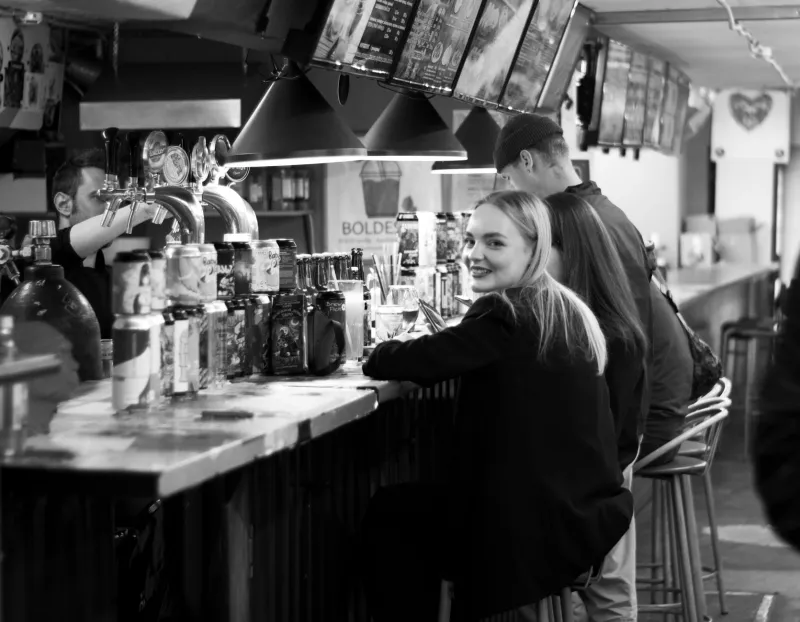
Reading the Room: How a Great Night Knows When It's Over

There's a version of every bar night that ends perfectly. The tab gets settled, the goodbyes feel genuine, and you walk out into the cool air with exactly the right amount of warmth in your chest. You remember it fondly. You come back.
Then there's the other version.
You know the one. The crowd thinned out an hour ago. The bartender has wiped down the same section of the bar three times. Your stories are getting longer and your audience is getting quieter. Nobody says anything, but something in the air has shifted — and you're the last one who hasn't noticed.
Knowing when a night is over is, quietly, one of the most important things a person can learn. And if you pay attention, the tavern will teach it to you.
The Room Has a Pulse — Learn to Feel It
A bar at its best is a living thing. There's a rhythm to it: the rise and fall of laughter, the movement of people between tables, the particular hum of a room that's fully alive. Experienced regulars don't just sit inside that energy — they track it.
Around 10 on a weeknight, or maybe midnight on a Friday, that pulse starts to slow. It's subtle at first. Conversations that were overlapping start to separate. The background music feels a little louder because there are fewer voices competing with it. Groups of four become pairs, and pairs start doing that thing where they check their phones without really looking at them.
This isn't a bad sign. It's just the night breathing out. The mistake people make is trying to breathe life back into something that's naturally winding down — ordering another round when the energy's already heading for the door, pushing for one more story when the room has already started its quiet goodbye.
The regulars at places like Pigeon Cove Tavern learn to ride that rhythm rather than fight it. They've been around long enough to know that a night that ends at the right moment is a night worth repeating.
What Your Bartender Is Actually Telling You
Bartenders are diplomats. They've spent years developing a vocabulary of signals that communicates volumes without ever being rude. If you've spent any real time on a barstool, you've probably seen the whole dictionary without realizing it.
The check appearing without being asked for is the most obvious one. But there are subtler moves: the glass that gets filled a little less generously than usual, the slight pivot in body language toward the other end of the bar, the way a conversation gets wrapped up just a beat faster than before. None of it is hostile. All of it is intentional.
A good bartender wants you to have a great time — and part of that job is protecting the memory of the night. They've watched enough evenings curdle in the final hour to understand that overstaying is its own kind of harm. Not just to the staff trying to close down, but to the guest who'll cringe about it later.
If you're paying attention to these signals and responding to them gracefully, you're already in the top tier of bar patrons. And trust us — the staff notices.
The Difference Between Lingering and Overstaying
There's real value in lingering. Some of the best conversations happen in the slow-down hours, when the crowd has thinned and there's actual space to breathe. A leisurely last drink with a close friend, a genuine exchange with the person next to you, a moment of quiet reflection at the bar — none of that is what we're talking about.
Overstaying is something different. It's when you're no longer present in the moment but instead holding onto it past its natural life. You're not enjoying the night anymore — you're negotiating with it, trying to extend something that's already concluded. The drinks stop tasting as good. The jokes land a little flat. The space between words gets uncomfortable.
Regulars develop an almost instinctive sense for this line. It comes from years of being in the same space, watching others cross it, and occasionally crossing it themselves. Maturity in a bar context isn't about how much you can drink or how long you can stay — it's about knowing the difference between a moment worth stretching and one worth releasing.
Why Leaving Well Is a Form of Respect
Here's something that doesn't get said enough: a graceful exit is a gift to everyone in the room.
When you read the signals and respond to them — settling your tab, saying genuine goodbyes, walking out while the night still feels good — you're respecting the staff, the space, and the experience itself. You're also respecting yourself. There's a dignity in leaving on your own terms, before anyone has to nudge you toward the door.
It's the same instinct that makes someone a good guest at a dinner party or a considerate neighbor. It's social awareness applied to one of the most communal spaces in American life. And in a place built around community — the kind of neighborhood anchor that Pigeon Cove Tavern tries to be — that awareness is what separates someone who visits from someone who truly belongs.
The regulars who've been coming back for years, the ones the staff knows by name and genuinely looks forward to seeing? They figured this out. They don't need to be the last one standing to prove they had a good time. The good time proves itself.
The Exit as Part of the Story
Every great night has an arc. There's the arrival — that first drink, the settling in, the hello to familiar faces. There's the middle — the conversations that go somewhere unexpected, the laughs that come out of nowhere, the feeling of being exactly where you're supposed to be. And then there's the ending, which matters more than most people give it credit for.
A clean exit doesn't diminish the night. It completes it. You walk out with the story intact, the good feeling preserved, and the genuine desire to do it again. The bar stays the place you love instead of the place you remember a little too clearly for the wrong reasons.
Last call isn't a punishment. It's a cue. The best nights end because they were good enough to deserve a proper finish — not because someone finally turned the lights all the way up.
Know the difference. Read the room. Leave while it still feels like something worth coming back to.
We'll see you next time.