Nobody's Leaving: The Strange, Wonderful Magic of a Stormy Night at the Bar
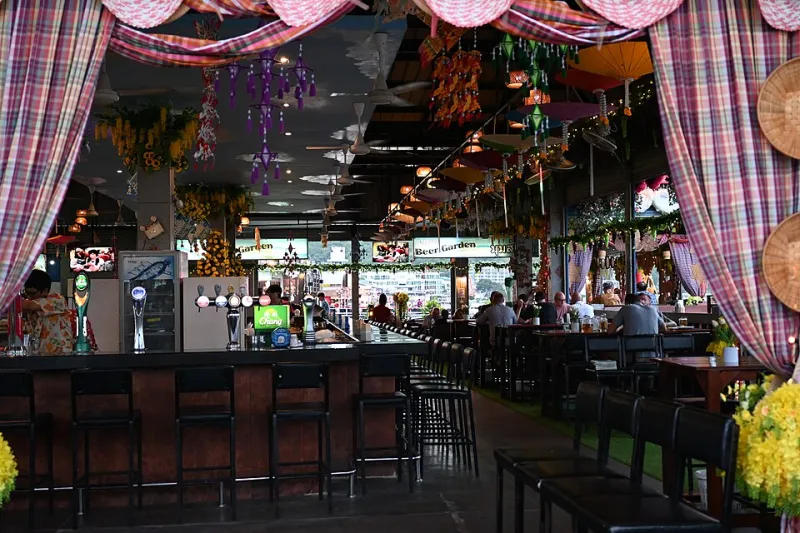
Photo: PattayaPatrol, CC BY-SA 4.0, via Wikimedia Commons
Let us confess something slightly unprofessional: when the forecast turns ugly, a little part of us lights up.
Not because we root for bad weather—we don't wish a nor'easter on anyone. But anyone who's worked in or bellied up to a coastal tavern knows what happens when the sky opens up and the roads turn questionable. People stop leaving. And when people stop leaving, something remarkable starts.
The Room Changes Temperature
Meteorologists talk about the weather outside. We pay attention to the weather inside, because a storm changes the atmosphere of a bar in ways that are hard to explain and impossible to fake.
On a normal night, there's churn. People come in, have two, and head home. The room breathes in and out. But on a snowed-in or rained-out night, the door stops swinging. Everyone present has, whether they said it out loud or not, decided they're staying put for a while.
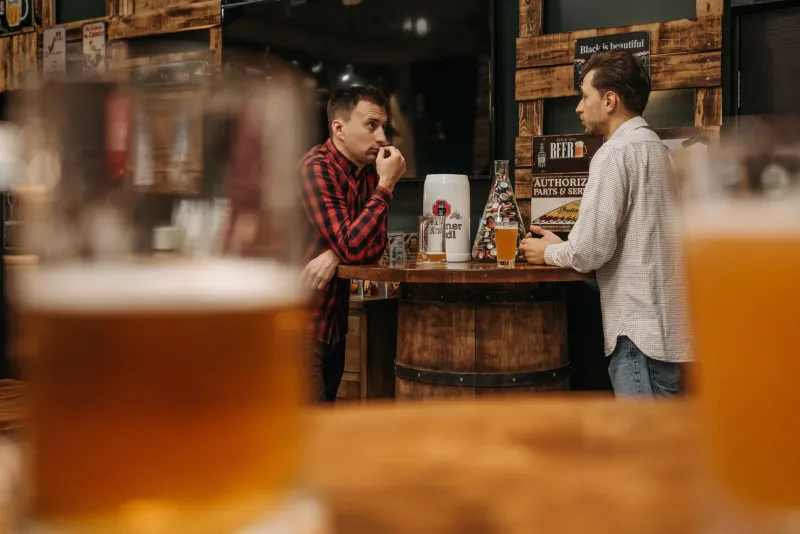
That decision rewrites the social physics of the entire room. Strangers who'd normally nod at each other start talking. The couple at the two-top invites the solo guy at the bar to join them when a table opens up. Somebody starts telling the story about the boat, or the blizzard of '78, or the wedding, and nobody checks their phone.
Why Bad Weather Is the Great Equalizer
Here's our theory. On a good-weather night, everyone has somewhere else to be eventually—the gym, the couch, the other plans. The tavern is one stop on the itinerary.
When the storm hits, the itinerary dies. And suddenly the tavern isn't a stop. It's the destination, the shelter, and the schedule all at once. Everyone in the room has been reduced to the same circumstances: we're all here, we're all staying, and nobody's driving anywhere.
There's real equality in that. The contractor and the college professor are both stuck. The regular and the first-timer are both watching the same rain hammer the windows. Shared inconvenience, it turns out, is a powerful bonding agent.
And yes—the beer genuinely does taste better. We can't prove it. We just believe it, and so does everyone in the room.
The Night the Tavern Earns Its Keep
Anyone can run a bar on a beautiful Friday in July. But the nights that matter—the nights that make a tavern part of the neighborhood's bones—are the ugly ones.
When the power flickers and the staff lights candles instead of closing up. When the kitchen keeps the fryer on because a table of stranded snowplow drivers needs dinner. When somebody's car won't start and three people offer a jump before the door even closes behind them. That's when a tavern proves it's not just a business. It's infrastructure. Social infrastructure, sure, but infrastructure all the same.
Every coastal town has stories like this. The bar that stayed open through the storm. The night the whole street ended up in one room. Ask around—every regular has one, and they tell it like a war story, with pride.
Making the Most of Your Next Washed-Out Evening
If the forecast looks rough and you're tempted to cancel everything: consider this instead.
- Go early, settle in. Beat the crowd, claim a comfortable seat, and accept that you're not watching the clock tonight.
- Order the thing that takes time. Stew, chowder, anything slow. Match your food to the weather.
- Talk to your neighbor. Storm nights are the single easiest time to strike up a conversation. Everyone's in the same boat—literally, sometimes.
- Leave the car if you can. Walking home through the rain after a warm evening inside is a core memory waiting to happen.
- Thank the staff. They chose to be there so you could choose to be there. That counts.
Come Rain, Come Snow, Come Anyway
We're not asking you to drive through a blizzard. Safety first, always. But the next time the sky looks threatening and your plans dissolve—remember that some of the best nights in tavern history happened because nobody could leave.
The storm outside makes the room inside matter more. We'll keep the lights on and the soup warm. You just get here.