Slow Down and Stay Awhile: The Forgotten Pleasure of a Night That Builds
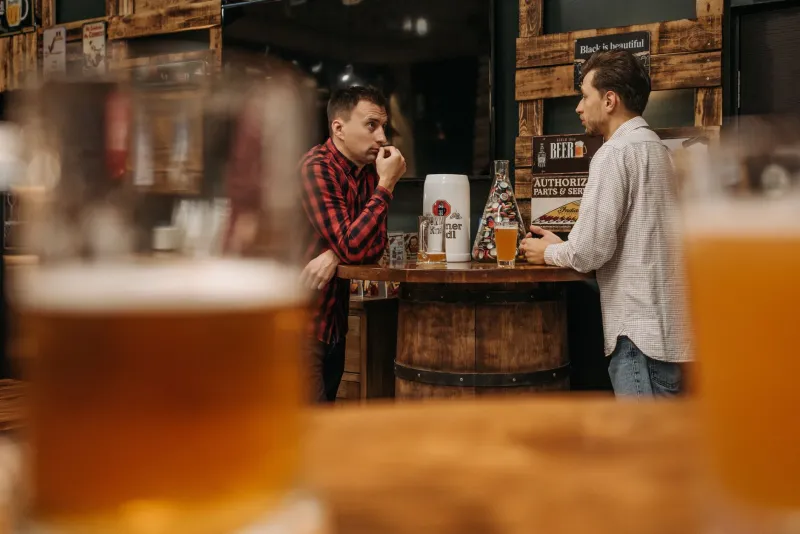
There's a particular kind of bar that wants you in and out. You can feel it the moment you walk through the door — the music a few decibels too loud, the lighting calibrated to make you feel vaguely uncomfortable if you linger, the staff moving with the practiced efficiency of people whose job is turnover, not connection. Those places serve a purpose. But they're not the point.
Then there's the other kind. The kind where you sit down, exhale, and somehow forty-five minutes pass before you even think about ordering a second drink. The kind where a good night doesn't announce itself — it accumulates.
At Pigeon Cove Tavern, we've always believed the second kind is worth understanding, worth protecting, and worth building your evening around.
The First Drink Is a Promise, Not a Race
Walk into almost any tavern on a Friday night and you'll see two distinct camps. One group is ordering rounds before their coats are off, trying to compress a good time into the smallest possible window. The other group settles in — takes a look at the taps, asks a question or two, maybe glances at the menu before committing. These people aren't being indecisive. They're being smart.
The first drink you order at a place you love should feel like a handshake. It's a signal to the bar and to yourself that you're here, present, and not going anywhere for a while. Regulars at any good neighborhood tavern understand this almost instinctively, even if they'd struggle to explain it. They're not pacing themselves out of caution — they're pacing themselves because they know the night has a shape, and the best shape isn't a sprint.
A bartender who respects this rhythm won't rush you. They'll let that first glass breathe a little. They'll check in without hovering. They understand that their job isn't just to move product — it's to manage atmosphere.
How the Room Tells You What to Do
Pacing isn't just about what's in your glass. It's about everything happening around you.
Good tavern music is one of the most underrated elements of a well-run evening. When the playlist moves thoughtfully — something familiar but not aggressive early on, building in energy as the room fills — it gives your brain permission to relax. You stop thinking about your phone. You start paying attention to the person across from you. A well-curated soundtrack doesn't demand your attention. It earns it.
Food timing matters just as much. There's a reason the best taverns don't rush your appetizers to the table before you've had a chance to settle in, and why they don't drop your check the moment your plate is cleared. A well-timed meal gives the conversation room to breathe. It creates natural pauses — moments where the night shifts gears without anyone calling a meeting about it.
Lighting, too. Low and warm doesn't just look better in photos. It slows people down. It makes you lean in instead of looking around. There's actual psychology behind it, but you don't need a study to know it's true. You've felt it.
Why Regulars Never Have to Think About This
Here's something interesting: if you ask a regular at any great tavern why they keep coming back, they'll probably say something like the vibe, or it just feels right. They won't say the pacing of the service respects the natural arc of a social evening. But that's essentially what they mean.
Regulars have internalized the rhythm of a place they love. They know when to order, when to let a conversation sit, when the kitchen is running hot and when it's worth asking for something special. They've stopped fighting the pace of the room and started moving with it. And the result is that their nights feel fuller, more memorable, and somehow longer — in the best possible way.
New visitors sometimes mistake this for cliquishness. It isn't. It's fluency. And the good news is that fluency is learnable. You just have to show up enough times to let the place teach you.
The Case Against Rushing Yourself
We live in a culture that treats efficiency as a virtue even when it isn't. The idea that a good night out should be optimized — hit multiple bars, maximize social coverage, keep moving — is a real thing, and it produces a real kind of exhaustion. You get home and realize you don't actually remember any individual moment from the evening. It all blurred together.
A slow-burn tavern night is the antidote to that. When you commit to a room and let the evening develop at its own pace, something different happens. Conversations go somewhere. Jokes get callbacks. You learn something about the person sitting next to you that you wouldn't have discovered if you'd been watching the clock.
The best nights at Pigeon Cove — the ones people talk about the next morning, the ones that become the reference point for future evenings — almost never started with someone announcing they were going to have a big night. They started with someone sitting down, ordering something good, and deciding, consciously or not, to stop being in a hurry.
Give the Night Room to Surprise You
Patience at a bar isn't passive. It's an active choice to trust that something worth remembering is still ahead of you. The shot-at-the-door approach assumes the best moment has to be manufactured immediately. The slow burn assumes the best moment is still coming — and it's usually right.
Next time you walk through our doors, try this: order something you've never had before, find a seat that isn't right next to the TV, and just... let the room come to you. Don't check your phone for the first twenty minutes. Notice who's here. Listen to what's playing. Let your bartender do their job without rushing them.
The night will find its shape. It always does. You just have to give it enough time to get there.