Five Minutes at the Door: How to Know If a Bar Actually Wants You There
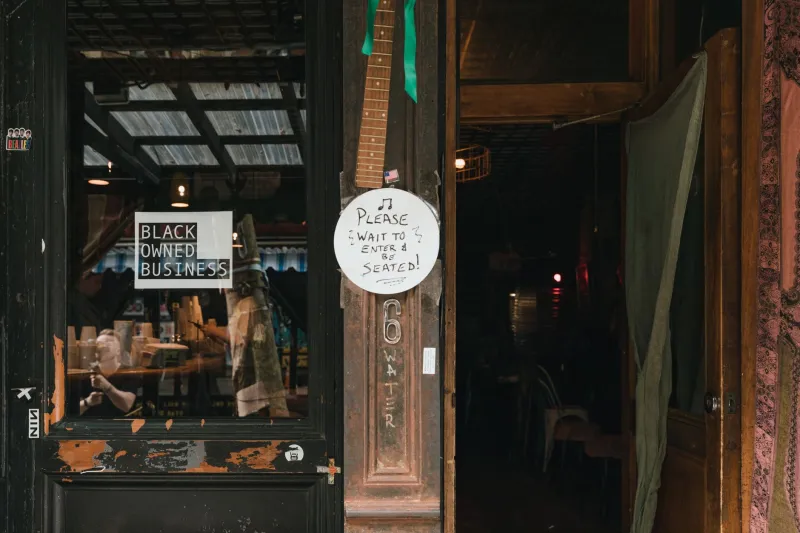
Let's be honest about something. Walking into a bar you've never been to before is a mild form of social courage. You don't know the layout, you don't know the crowd, and for a brief uncomfortable window, everyone in the room knows you're new before you know anything about them. It's a small vulnerability, but it's real.
The good news is that a genuinely welcoming tavern will tell you exactly what it is within about five minutes of arrival — if you know what to pay attention to. Not everything is in the handshake. Some of it is in the lighting. Some of it is in how the staff moves. Some of it is in what happens when someone laughs.
Here's how to read the room before you've even ordered.
The Thirty-Second Door Test
The moment you walk in, something happens — or it doesn't. A good bar acknowledges you. Not necessarily with a wave or a shout, but with awareness. The bartender makes eye contact. A server nods. Someone at the nearest table glances up without the particular flatness of people who've decided you're not their problem.
That acknowledgment doesn't have to be warm. It just has to be present. What you're looking for is recognition — the basic signal that the people who work here have registered your existence and are not actively indifferent to it.
If you walk through the door and thirty seconds pass with no one having noticed you at all, that's information. It might mean the place is slammed and understaffed. It might mean something else. Either way, note it.
At Pigeon Cove, we have a pretty firm belief that the first thirty seconds set the tone for the whole visit. If someone's just walked in and they're standing near the host stand looking uncertain, that's not a person to leave standing.
Watch How the Staff Moves
Bartenders and servers communicate a lot through body language, and almost none of it is intentional. Watch how they move around the room. Are they making genuine eye contact with the people they're serving, or are they doing the efficient-but-distant thing where they're technically present but clearly somewhere else mentally?
More importantly, watch how they treat the people who are obviously regulars versus how they treat people who are clearly visiting for the first time. There's a version of this that's healthy — regulars get a little extra warmth, a little extra shorthand — and a version that's exclusionary, where newcomers are tolerated rather than welcomed.
The tell is in the transition. A good bartender who's laughing with a regular will still break away to give a newcomer a full, unhurried greeting. They won't make you feel like you interrupted something. The not-so-good version makes you feel exactly like that.
The Sound of the Room
This one is easy to miss because you're usually focused on the visual stuff, but take ten seconds to just listen.
A healthy bar has layered sound. There's music, yes, but underneath it — or woven through it — you can hear actual conversation. Multiple conversations. People laughing at different volumes. The occasional burst of something louder. The ambient hum of a room full of people who are genuinely engaged with each other.
A bar that feels unwelcoming often has a different sound profile. Either it's too quiet — a few isolated conversations, a lot of silence — or it's so loud that conversation is impossible and everyone's just kind of existing in proximity. Neither of those is automatically a dealbreaker, but both are signals worth interpreting.
What you want to hear is a room that sounds like it's actually working.
The Physical Layout Tells a Story
Look at the seating. Is it arranged for isolation or for connection? Booths that face away from everything, bar stools that don't quite fit together, tables spaced so far apart that you couldn't make eye contact with a neighbor if you tried — these are design choices, and they say something about what the place is optimized for.
A tavern that wants people to connect has bar seating that encourages conversation. It has a few communal spots — a big table, a standing rail, somewhere that strangers can end up next to each other without it being weird. It has sightlines that let you see most of the room from most seats, which creates the feeling of shared space rather than isolated pockets.
Also: check the condition of things. Not in a white-glove way — a well-loved tavern should look a little lived-in. But there's a difference between worn and neglected. Worn means people have been here a long time and the place has absorbed their presence. Neglected means nobody's paying attention. One of those is charm. The other is a flag.
The Regulars Are the Real Test
If there are people at the bar who are clearly regulars — they know the staff by name, they've got their drink in front of them before they've fully sat down — watch how they react to you.
This is the real litmus test, because regulars set the social temperature of a room more than anyone else. If they're warm or at least neutral toward newcomers, the bar probably is too. If they're visibly cliquish — if there's a perceptible shift in the room's energy when someone new walks in — that tells you something about what kind of community this place has built.
None of this means a bar with tight-knit regulars is unwelcoming. Some great taverns have communities that take a little time to earn your way into, and that's legitimate. But there's a difference between a community that's earned and a room that just isn't for you. The regulars will show you which one it is.
What It Feels Like When You've Found the Right Place
Here's the honest version: when you walk into a bar that's actually right for you, you probably won't be running through a mental checklist. Something will just settle. Your shoulders will drop a little. You'll feel like you can take your coat off without it being a decision.
That feeling is the sum of all the things above — the acknowledgment, the sound, the layout, the way the staff moves — landing at the same time. It's not magic. It's just a room that was built for people, by people who actually like having them around.
We'd like to think that's what you'll feel when you come through our door at Pigeon Cove. And if you're not sure yet, give it five minutes. The room will tell you everything you need to know.