Quiz Night Changed Everything: How Trivia Turned Your Local Bar Into a Classroom Worth Showing Up For
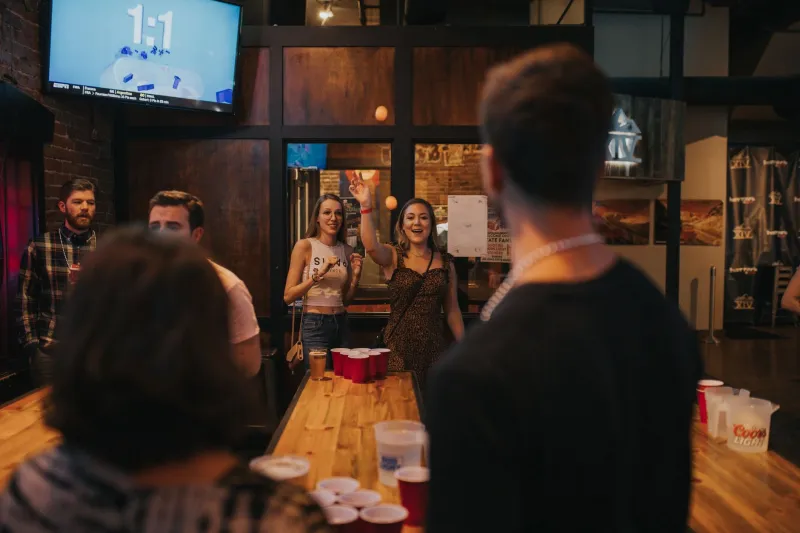
It starts with a question about the capital of Burkina Faso, and suddenly six strangers are leaning over a cocktail napkin like they're defusing a bomb. Someone's phone is facedown on the table per the rules. The pitcher is half empty. Nobody wants to leave.
That's trivia night at its best — and if you haven't experienced it, you're missing out on one of the more genuinely fun things happening in American bars right now.
The Third Place, Redefined
Sociologists have talked for decades about the concept of the "third place" — somewhere that isn't home, isn't work, but still feels like yours. The corner barbershop. The church basement. The diner where the waitress knows your order. For a long time, the neighborhood tavern filled that role naturally, just by being open and keeping the barstools warm.
But something shifted. Between the rise of streaming services, remote work, and an overall retreat into screens, people stopped wandering into bars just to be around other people. Foot traffic got harder to earn. Regulars needed a reason to show up on a specific night, at a specific time, with a specific group of people.
Enter trivia.
What started as a British pub tradition — quizmasters with microphones, teams scrawling answers on paper slips — migrated to the US and quietly became one of the most reliable community-building tools a bar owner could deploy. It's not just entertainment. It's a standing appointment. It's accountability. It's the kind of thing where, if you miss a week, your teammates give you grief about it the following Tuesday.
Why Our Brains Are Wired for This
There's a reason trivia feels so satisfying even when you're wrong. Psychologists point to something called "retrieval practice" — the act of trying to pull a memory out of storage actually strengthens that memory, whether you get the answer right or not. Your brain gets a little workout. And when you do get it right, there's a dopamine hit that rivals a lot of more expensive hobbies.
Pair that with the social element — the groaning when someone blurts out the wrong answer, the collective gasp when a team pulls off a comeback in the final round, the genuine pride of knowing that you were the one who remembered the year "Thriller" was released — and you've got something that taps into some pretty primal human instincts. We want to learn. We want to compete. We want to belong to something.
A bar with a good trivia night offers all three in a two-hour window, with cold drinks and decent food on the side.
What Makes a Trivia Night Actually Work
Not all quiz nights are created equal. Anyone who's sat through a trivia night with bad audio, recycled questions, or a host who reads everything in a monotone knows exactly what we're talking about. The difference between a trivia night people drive across town for and one that fizzles out after three weeks usually comes down to a few key things.
The host matters more than the questions. A great quizmaster is part teacher, part stand-up comedian, part referee. They keep the energy up between rounds, handle disputes with humor instead of defensiveness, and make newcomers feel like they belong even when they finish in last place.
Category variety is everything. The best nights mix pop culture with history, throw in a music round, maybe a picture round where you identify famous faces or landmarks. You want every team to have at least one moment where they feel like geniuses and at least one where they feel completely humbled. That balance keeps people coming back.
The stakes need to feel real without being stressful. Bar tabs, gift cards, the glory of getting your team name on a chalkboard — these prizes work because they're meaningful within the context of the night without carrying any real-world pressure. You're not losing money. You're losing bragging rights. That's a loss you can laugh off and immediately want to avenge.
The Loyalty Loop Nobody Talks About
From a business standpoint, trivia nights do something remarkable: they create habitual customers. A couple who discovers your trivia night on a whim in March might become two of your most reliable Wednesday-night regulars by June. They bring friends. Those friends start forming their own teams. Suddenly you've got a built-in community that treats your bar like their living room — except they're paying for drinks and appetizers instead of raiding your fridge.
Bar owners who invest in quality trivia programming often report that it lifts the whole week, not just the night of the event. People who come in for trivia tend to remember the experience fondly enough to come back on a Saturday, or stop in for happy hour, or book the space for a private event. The trivia night is the introduction. The rest of the relationship builds from there.
What Keeps Teams Coming Back to Pigeon Cove
Here at Pigeon Cove Tavern, we've seen firsthand what a good quiz night does to a room. There's something about sitting around a table with your people, arguing over whether a particular movie came out in 1994 or 1995, that strips away all the noise of the week. Nobody's checking emails. Nobody's half-present. Everyone is in it.
We've watched first dates turn into regulars. We've seen coworkers who barely talked in the office become fiercely loyal trivia teammates. We've watched a grandmother absolutely demolish a table of twenty-somethings on a classic rock round and take her victory lap with zero apologies.
That's the thing about trivia. It's a great equalizer. The person who didn't finish college might know more about geography than anyone in the room. The quiet guy at the end of the table turns out to have encyclopedic knowledge of 1980s sitcoms. Everyone gets a moment.
Show Up, Even If You Don't Know Everything
If you've been on the fence about joining a trivia night — worried your knowledge isn't deep enough, or that you won't know anyone — let us be direct: that's exactly the wrong reason to stay home.
The best trivia teams aren't made up of experts. They're made up of curious people who show up, pay attention, and argue in good faith. You don't need to know everything. You just need to know something, and be willing to sit around a table with people who know different things than you do.
That's the whole point, really. Not just the trivia. The table. The people. The cold drink in your hand while someone reads a question about the deepest lake in the world and the whole bar goes quiet for just a second.
We'll see you Wednesday.